About District 7
Welcome to Boston City Council District 7. Learn about the rich history of our district, meet your City Councilor, and get to know the dedicated team working every day to serve the residents, neighborhoods, and businesses that make District 7 a vibrant and thriving community.

A Timeline of Resilience
From migration and culture to discrimination and displacement, District 7 has always been defined by strength and power of community.

1800s–Early 1900s
New Communities
Build Boston
The neighborhoods that make up today's District 7 become home to Black residents and immigrants from Ireland, the Caribbean, Canada, the Mediterranean, and elsewhere. Churches, businesses, schools, settlement houses, and civic organizations create a foundation for community life. The South End in particular becomes one of Boston's most diverse neighborhoods.

1930s–1960s
Redlining & Housing Discrimination
Redlining, racial segregation, discriminatory lending, and exclusionary housing practices limit where Black residents and other families can live and build wealth. Roxbury and the South End are profoundly affected by disinvestment and unequal access to mortgages and housing opportunity.

1937
Jazz Square
Flourishes
The Hi-Hat becomes part of the growing jazz scene around Columbus and Massachusetts Avenues. Initially serving white audiences despite operating in a predominantly Black neighborhood, the club later opens to Black patrons as Boston's jazz culture grows.

1947
Wally's Makes
History
Barbadian immigrant Joseph L. "Wally" Walcott opens Wally's Paradise at 428 Massachusetts Avenue. Walcott becomes the first Black nightclub owner in New England, creating a space where Black Bostonians could gather and experience live jazz during an era of segregation.

1950s - 1970s
Urban Renewal
& Displacement
Highway proposals, demolition, and urban-renewal projects transform Roxbury and the South End. According to the history you provided, more than 25,000 Bostonians are displaced, including approximately 17,250 people from Roxbury and the South End. Black families bear a disproportionate share of displacement while discriminatory lending makes relocation and homeownership especially difficult.

1960s - 1980s
Community Organizing
& Resistance
As residents confront housing discrimination, deteriorating conditions, unemployment, and redevelopment, Roxbury becomes a center of grassroots organizing. By the late 1960s, neighborhood activists increasingly organize around housing, education, employment, development, and community control.

1990s - 2020s
Development
& Displacement
Investment returns to many District 7 neighborhoods, bringing new development alongside concerns about affordability and displacement. A 2024 Boston City Council hearing order cited research showing that between 2000 and 2015 Roxbury's Black population declined from 62% to 53%, while housing costs increased sharply.

TODAY
Building District 7's
Next Chapter
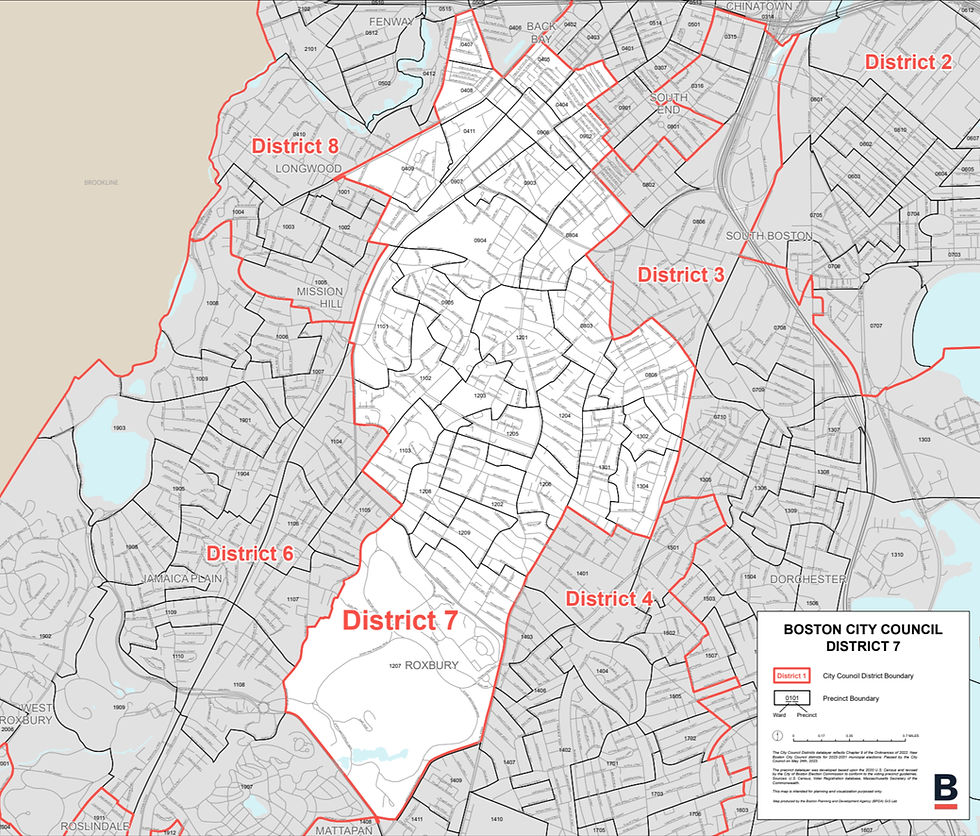
District 7 encompasses communities shaped by generations of migration, culture, entrepreneurship, activism, and resilience. Roxbury, Dorchester, the South End, and Fenway continue to change, while residents and community institutions work to ensure that longtime residents can remain, build wealth, access opportunity, and help determine the future of their neighborhoods.
Present - Day
Boston's District 7 is a community defined by its rich history, cultural diversity, and resilient neighborhoods. Encompassing Roxbury, parts of Dorchester, the South End, and Fenway, District 7 has long been at the heart of Boston's civil rights movement, arts and culture, entrepreneurship, and community leadership. Today, it is home to residents, businesses, institutions, and organizations working together to build a more equitable, vibrant, and connected future while honoring the neighborhood's enduring legacy.

Roxbury

Dorchester

South End

Fenway
Meet the District 7 Councilor
Miniard Culpepper
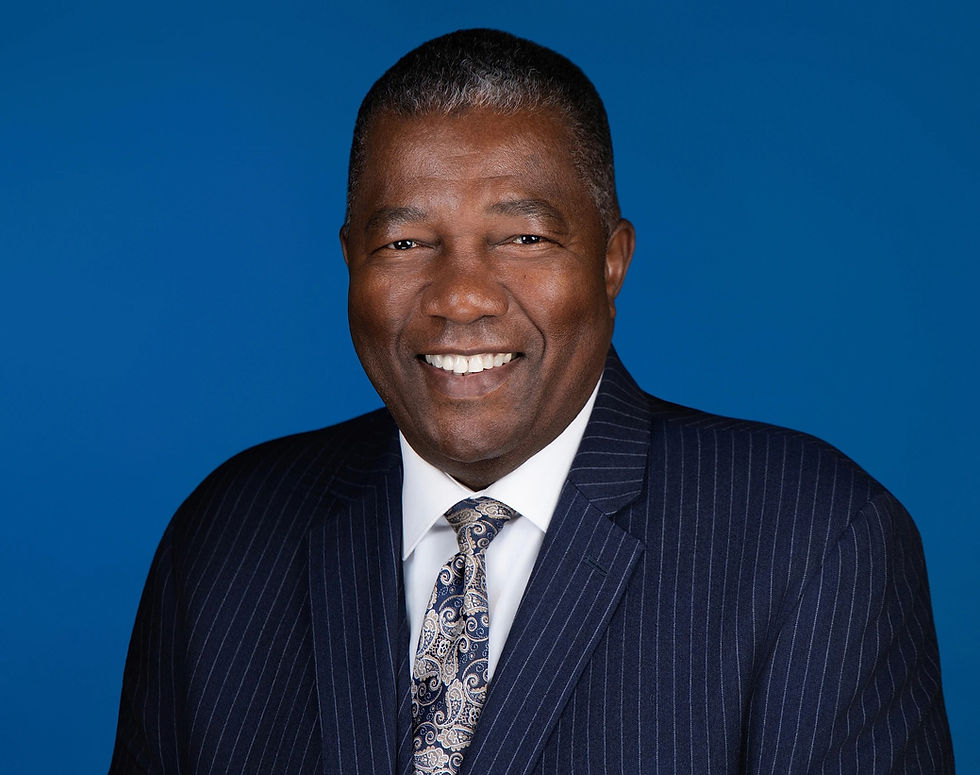
Councilor Miniard Culpepper is a lifelong fighter for civil rights, housing justice, and economic equity. He began his first term on the Boston City Council on January 5th, 2026, representing District 7. District 7 includes the neighborhoods of Fenway, Roxbury, Dorchester, and the South End. Born and raised on Seaver Street in Dorchester, Councilor Culpepper was shaped by the legacy of activism that runs deep in his family. His grandparents were the first Black couple to live on Seaver Street, and his grandfather—a pastor and NAACP leader—marched with Dr. Martin Luther King Jr. and built one of Boston’s first Black-owned nursery schools. That example of servant leadership, faith, and fearless action instilled in Councilor Culpepper a lifelong commitment to justice and community. Councilor Culpepper is a proud graduate of English High School, Brandeis University, Howard Divinity School, and Suffolk University Law School. As a young lawyer, he went head-to-head with City Hall to help a friend purchase a boarded-up house in Grove Hall—a fight that transformed his view of housing as a cornerstone of dignity and opportunity. His career in public service has spanned decades. As New England Regional Counsel for the U.S. Department of Housing and Urban Development (HUD), Councilor Culpepper fought for tenants’ rights, fair housing, and reinvestment in underserved neighborhoods. He led the charge to implement Boston’s first Civil Rights Protection Plan in public housing, exposed racial discrimination at the Boston Housing Authority, and helped secure $25 million in federal funds to rebuild public housing developments across the city. He also fought for funding for affordable housing communities like Academy Homes, A Field Estates, and the Franklin Park Apartments—championing safe, stable housing for Boston families. Beyond his federal service, Councilor Culpepper has always remained deeply rooted in the community. As Senior Pastor of Pleasant Hill Missionary Baptist Church, he founded the Trotter Peace Program to support mentorship and employment opportunities for young people of color, and he spearheaded the Six Point Peace Plan to reduce community violence. During the pandemic, he led grassroots vaccination and food distribution efforts to protect and uplift his neighbors. As Councilor, Councilor Culpepper is excited to build a District 7 where longtime residents can stay, families can thrive, and every neighborhood shares in Boston’s prosperity. He is committed to advancing housing stability, economic opportunity, strong schools, safe and healthy communities, and a city government that is transparent, accountable, and rooted in community voice. Guided by faith, shaped by lived experience, and grounded in decades of public service, Councilor Culpepper approaches this work with urgency and humility—ready to partner with residents to deliver real results for District 7 and help shape a more just, inclusive Boston for generations to come.
.jpg)